Recycling and Sustainability for Tree Surgeons Edmonton
 At Tree Surgeons Edmonton, sustainability is built into the way we work from the moment a tree is assessed to the moment its arisings leave site. Modern tree surgery in Edmonton creates a wide mix of material, from timber and chippings to leaf litter and metal fixings, and each stream needs a responsible outlet. Our aim is to keep as much as possible away from landfill while supporting the circular economy across North London and the wider boroughs. We have set a recycling percentage target of 95% for suitable waste streams, and we track performance so that timber, green waste, and reusable materials are sorted efficiently. This approach helps reduce emissions, lowers disposal pressure, and keeps our tree surgeons Edmonton service aligned with modern environmental expectations.
To reach that target, we focus on careful separation at source. Branchwood is chipped for reuse, larger timber is directed to wood recycling facilities, and metal from tree protection systems, fencing, and hardware is separated for metal recovery. In areas where boroughs encourage waste separation through different collection streams, we mirror that logic on site by keeping recyclable materials distinct from mixed waste. That means cleaner loads and better recovery rates at the transfer stage. For customers seeking sustainable tree surgeons in Edmonton, this practical sorting process is one of the clearest ways to reduce environmental impact without compromising on safety or quality.
We also recognise the value of local facilities. Material that cannot be reused immediately is taken to nearby transfer stations and waste handling points where it can be processed responsibly. Depending on the type of load, that may include local authority facilities serving Enfield and neighbouring boroughs, as well as regional recycling centres that specialise in green waste and construction-related by-products. 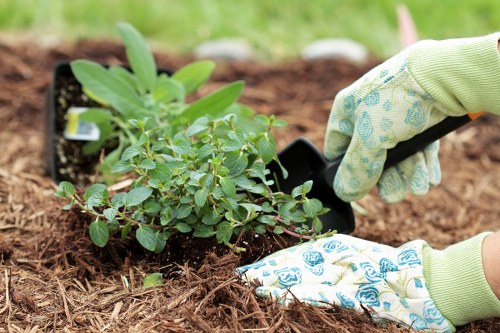 Using local transfer stations reduces travel distances, supports quicker turnaround, and keeps the journey from site to disposal as short as possible. In practice, that means lower fuel use and a smaller carbon footprint for every job completed by our Edmonton tree surgery teams.
The sustainability approach also extends beyond waste handling. Our crews use low-carbon vans where possible, prioritising efficient engines and route planning that cuts unnecessary mileage. Scheduled work is grouped geographically, helping reduce repeated trips across the borough and limiting idle time. This matters because transport is often one of the most significant sources of emissions in arboriculture. By improving logistics, we can make everyday tree care in Edmonton more climate-conscious without affecting responsiveness or service standards. We also encourage good practice such as regular vehicle maintenance, correct tyre pressures, and load optimisation, all of which contribute to better fuel efficiency.
 Another important part of our recycling strategy is our partnerships with charities and community-focused organisations. Reusable timber, when safe and appropriate, may be redirected for charitable projects, small-scale building uses, woodworking groups, or habitat initiatives rather than being crushed or discarded. Some hardwood offcuts can be especially valuable for community gardens, wildlife features, or craft use. We look for opportunities where material can have a second life before it is processed as waste. This supports local causes while reinforcing the idea that Tree Surgeons Edmonton should contribute positively to the area beyond the trees themselves.
Green waste management is also central to our process. Leaves, fine brash, and soft organic matter are often sent for composting or mulching rather than mixed with general refuse. In boroughs where household and commercial waste separation is common practice, this mirrors a wider regional effort to keep organic material out of landfill. The same principle applies to our operations: cleaner separation means better downstream recycling performance. We treat every load with the intention of recovering as much value as possible, whether through compost production, biomass routes, or reuse in land management.
There is also a strong environmental case for careful site planning. By assessing access, tree size, and material volumes in advance, our Edmonton tree surgeons can choose the right equipment and vehicles for the job. That reduces wasted journeys, avoids over-ordering disposal capacity, and makes sure recyclable materials are not contaminated by unsuitable waste. Where possible, we also advise on on-site separation of brash, timber, and non-organic items so that different materials can be routed correctly. This type of thoughtful sorting is increasingly important as borough waste systems become more structured and as communities expect higher standards of recycling performance.
Our sustainability goals are not limited to a single project or season. We review how much material is diverted from landfill, how many trips are made to transfer stations, and how effectively we use low-emission transport. Over time, these measures help us improve the way tree surgery services in Edmonton operate. They also help customers understand that responsible arboriculture is about more than pruning and felling; it includes the full lifecycle of the material produced.  When timber is reused, green waste is composted, and transport emissions are reduced, the overall environmental benefit is significant.
 In every part of our work, we aim to combine professionalism with a practical environmental ethic. That means aiming for a 95% recycling target, making use of local transfer stations, supporting charities through material reuse, and running low-carbon vans wherever possible. It also means embracing the borough-by-borough reality of waste separation and applying the same disciplined approach on site. For anyone looking for recycling-focused tree surgeons in Edmonton, sustainability should be more than a claim; it should be visible in how waste is handled, how journeys are planned, and how resources are given a second life.